
Zen
Do not redesign what people already love. Enhance it.
For almost two decades, Zen has built its identity around atmosphere: dark timber, oversized red light, warmth, art and an unmistakable Thai character. Chiaroscuro has been brought in not to reinvent that identity, but to protect and enhance it for the years ahead.
The new lighting strategy uses fiery reds, dim to warm light, carefully controlled accents and layered exterior lighting to strengthen what is already there, allowing the restaurant, its artwork, tables and architecture to come alive as daylight disappears.
A Durham institution
Zen has been part of Durham for around 18 years. Over that time, the restaurant has developed an atmosphere that has become inseparable from its identity.
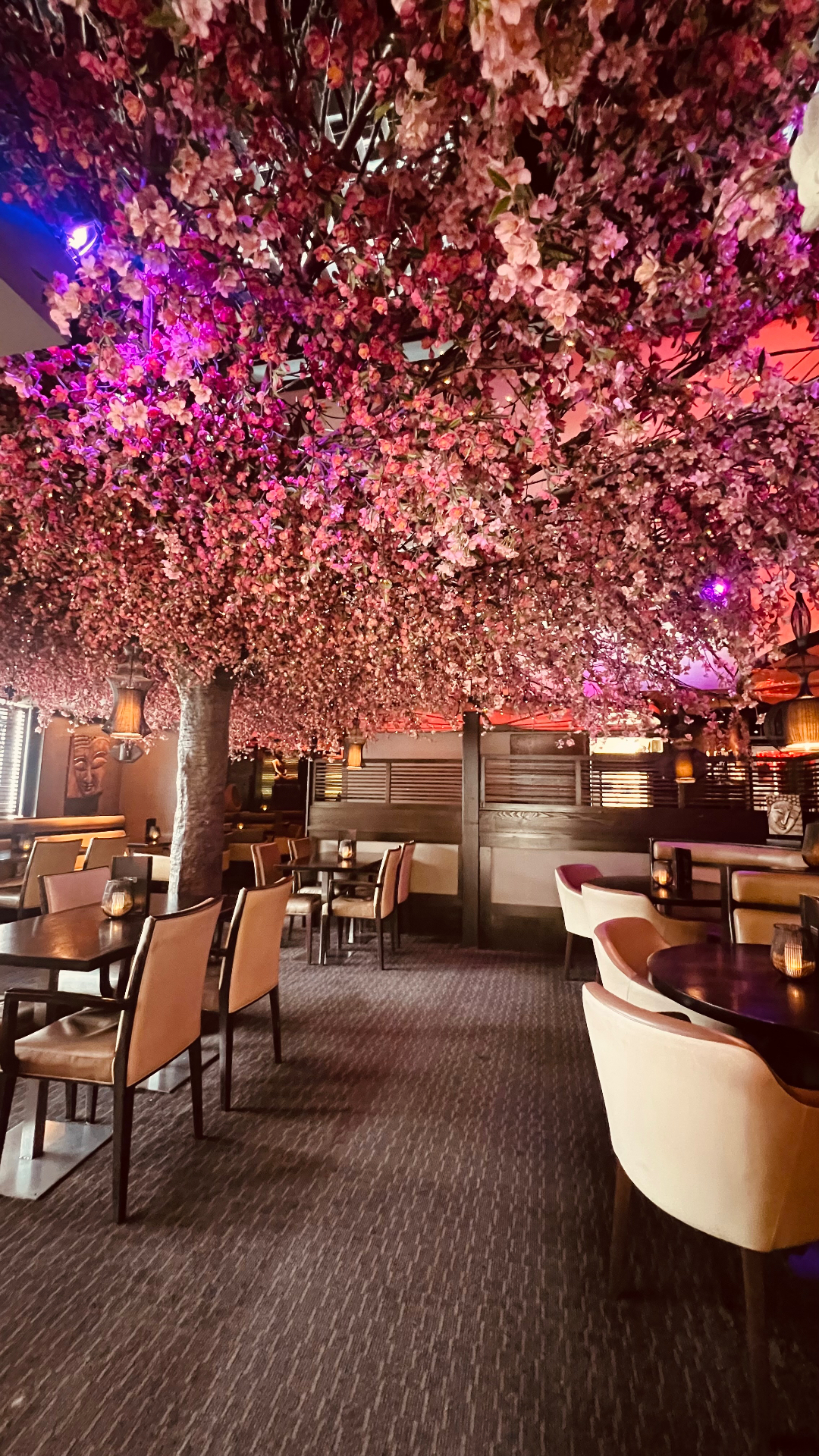
Dark woods, oversized red lighting, warm tones, cherry blossom and a strong Thai influence give the interior a character that regular customers already recognise.
That creates an unusual design challenge. The objective is not to arrive with a new aesthetic. It is to understand what already works, identify what makes Zen feel like Zen, and then use light to strengthen it.
The ambition is to retain the atmosphere that has served the restaurant so well while giving it greater depth, control, quality and longevity for the years ahead.
The brief wasn't to reinvent Zen.
It was to understand why people already love it.
The existing atmosphere
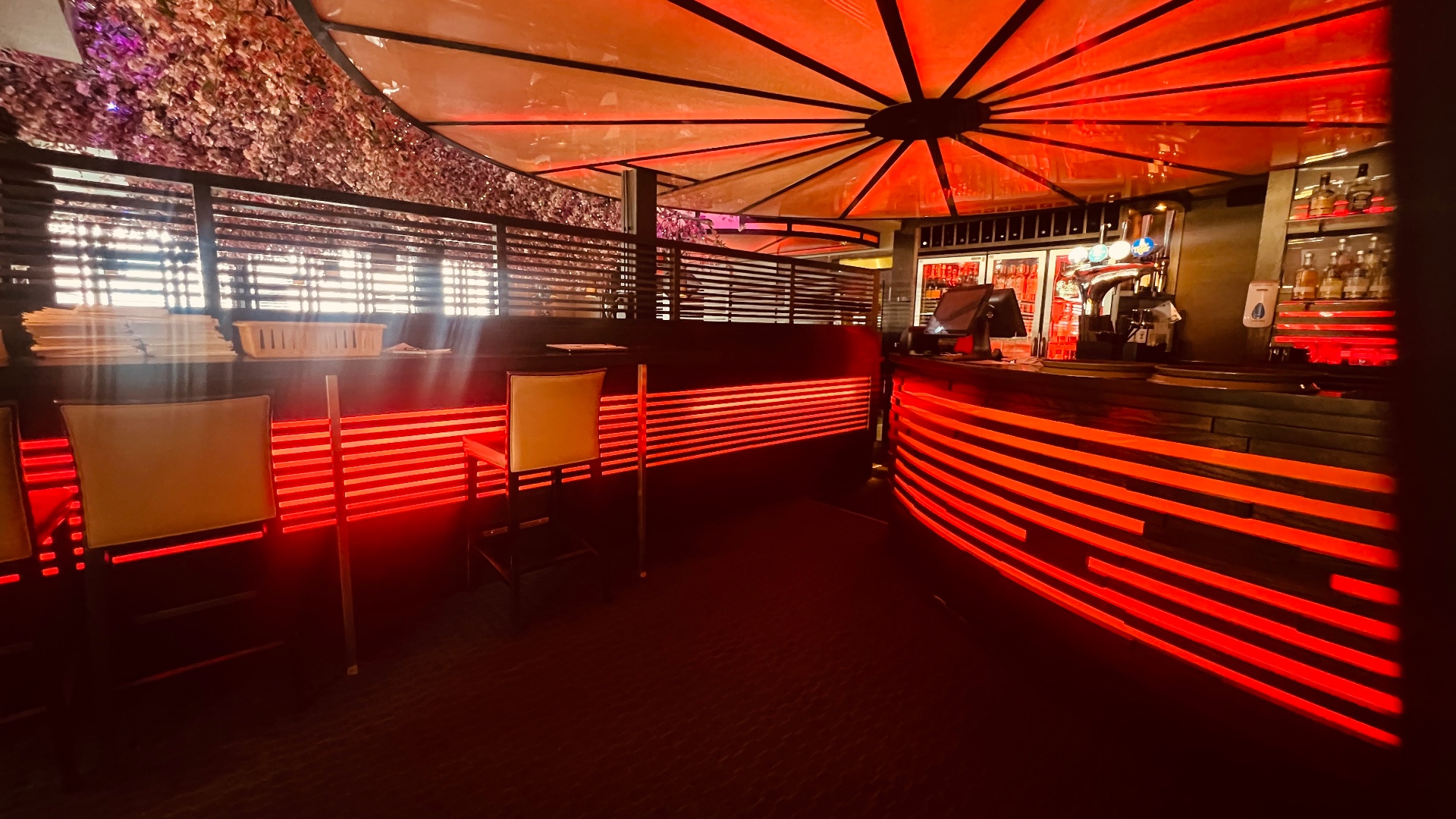
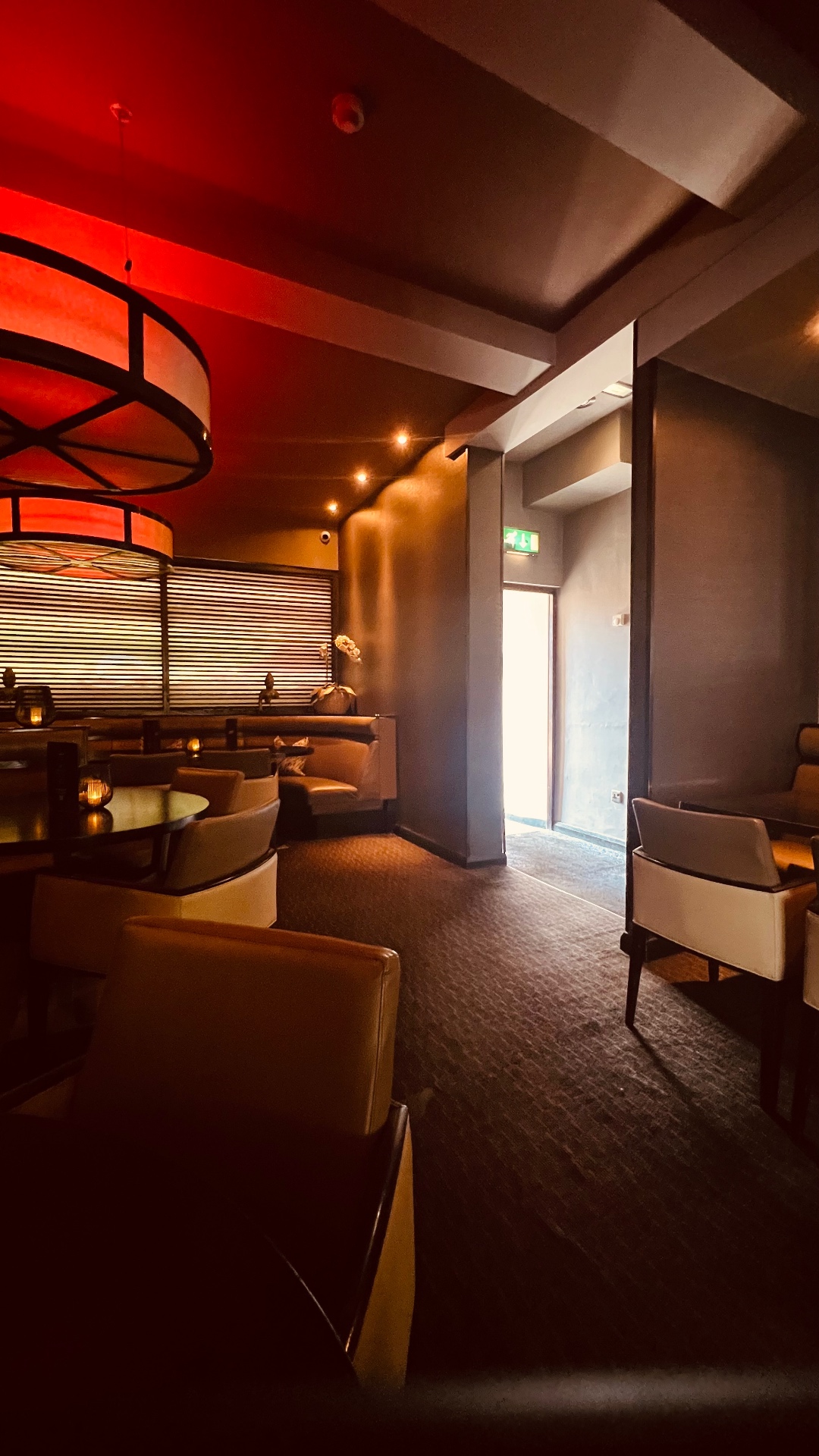
Zen already has a strong identity. The red light, dark finishes, large lantern forms and intimate seating are not elements to remove. They are part of the visual language of the restaurant.
The lighting strategy therefore begins with preservation rather than replacement.
The task is to refine the hierarchy, improve the quality of light and give greater control over where attention is drawn, while allowing the existing character to remain unmistakably Zen.
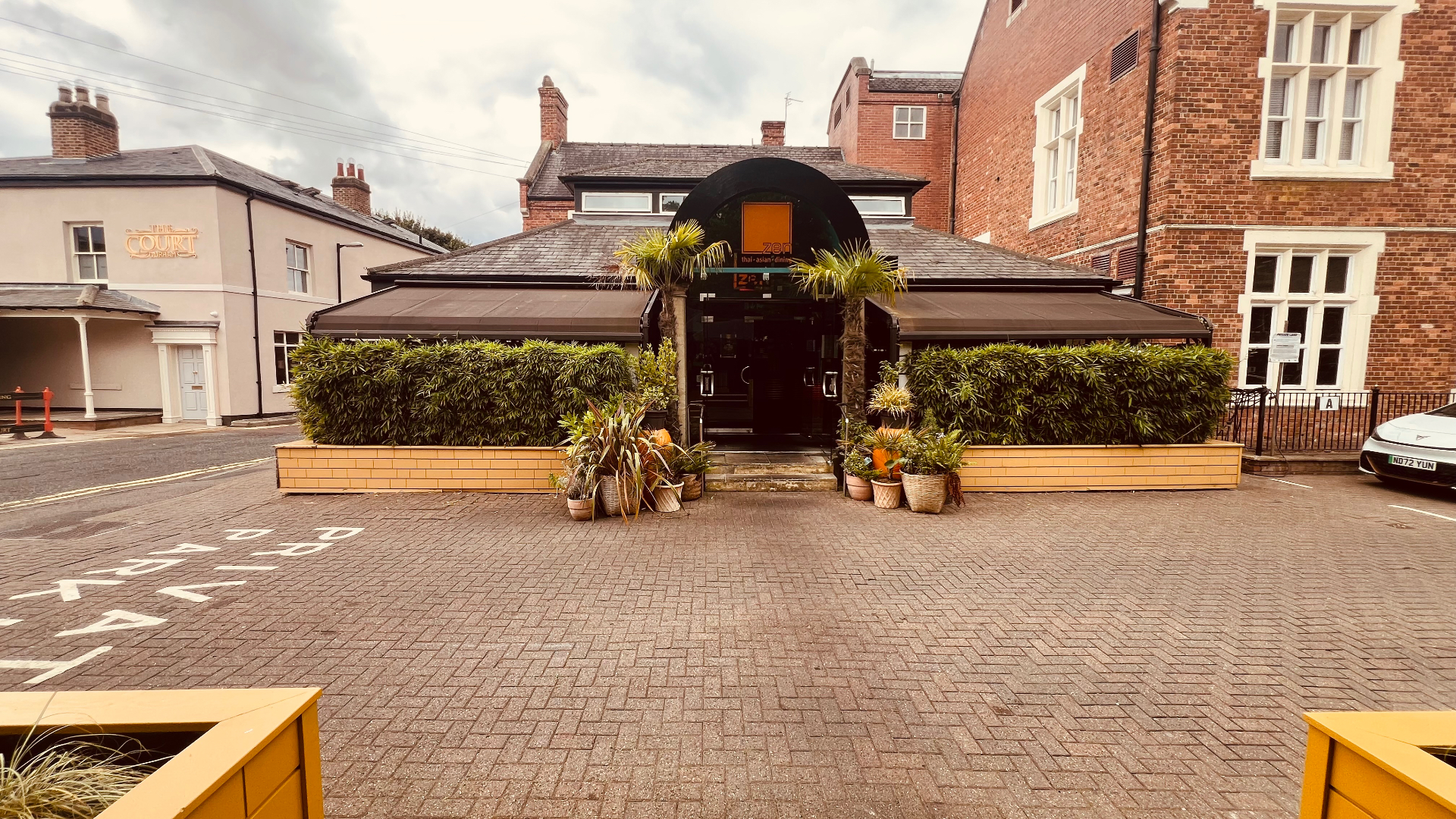
The photographs on this page are documentary. They record the restaurant before the new lighting intervention.
The experience begins outside
The lighting experience does not begin at the table. It begins on approach.
Soft warm light will pick up the flowing bamboo around the entrance, creating a gradual transition from the street towards the restaurant.
The intention is not to brightly announce the building. Light should gently draw people towards it. The entrance becomes the threshold between Durham outside and the warmer, richer world within.
Layered rather than lit
Once inside, the lighting strategy follows the architecture and the established character of the restaurant rather than competing with it.
The high vaulted ceilings provide scale. The famous cherry blossom tree creates a major visual anchor. Artwork, dining tables and the private dining areas create more intimate moments within the larger volume.
The lighting will establish hierarchy between these elements so that the restaurant is not perceived as one uniformly illuminated room. Different areas will gather light differently.
Tables become islands of warmth. Artwork emerges selectively. The surrounding architecture forms a darker backdrop. The objective is for the room to feel layered rather than simply illuminated.
Fiery reds and warm transitions
Red has always been part of Zen's visual identity. The new lighting scheme will develop that language rather than replace it.
Fiery reds and dim to warm light will form an important part of the atmosphere, creating depth and warmth against the darker timber backdrop.
The objective is not to wash the restaurant indiscriminately in red. Colour will become an atmospheric layer. Warm white light will provide the precision needed for food, artwork, faces and table presentation.
The result should feel warm and dramatic without compromising the quality of light where guests actually sit, eat and interact.
Atmosphere around the guest.
Precision on the table.
Light at the table
Food presentation is part of the experience. Light therefore needs to perform two different roles simultaneously. It must create atmosphere around the guest while rendering the table beautifully.
Tables should sit within warm, controlled areas of light rather than being exposed by general overhead illumination. Artwork and architectural features then create the surrounding visual landscape.
The intention is to create intimacy even within the larger vaulted volume.
Familiar landmarks
Certain elements of Zen have become part of its identity. The cherry blossom tree is one of them.
Rather than competing with these established features, the new lighting will give them greater presence within the hierarchy of the space.
Light should reveal the architecture and decorative elements selectively, allowing them to appear and disappear as the restaurant moves from daylight into evening.
One restaurant. Different moments.
The restaurant does not require one fixed lighting condition. Early evening, full dinner service, later dining and private events each demand a different balance.
Scene control will allow the atmosphere to evolve throughout the evening without requiring staff to manage individual lighting circuits.
The lighting should transition with the restaurant rather than simply switch on.
The spotlighting has been selected for its colour rendering and quality of light, particularly important in a restaurant where food, artwork, material and skin tones all need to remain natural within a highly atmospheric environment.
Lighting installation commencing September 2026.
Zen should still feel unmistakably like Zen.
Just more resolved.
The intention is not to replace the atmosphere that has made the restaurant successful. It is to use light to carry that atmosphere forward.
What should your space feel like after dark?